

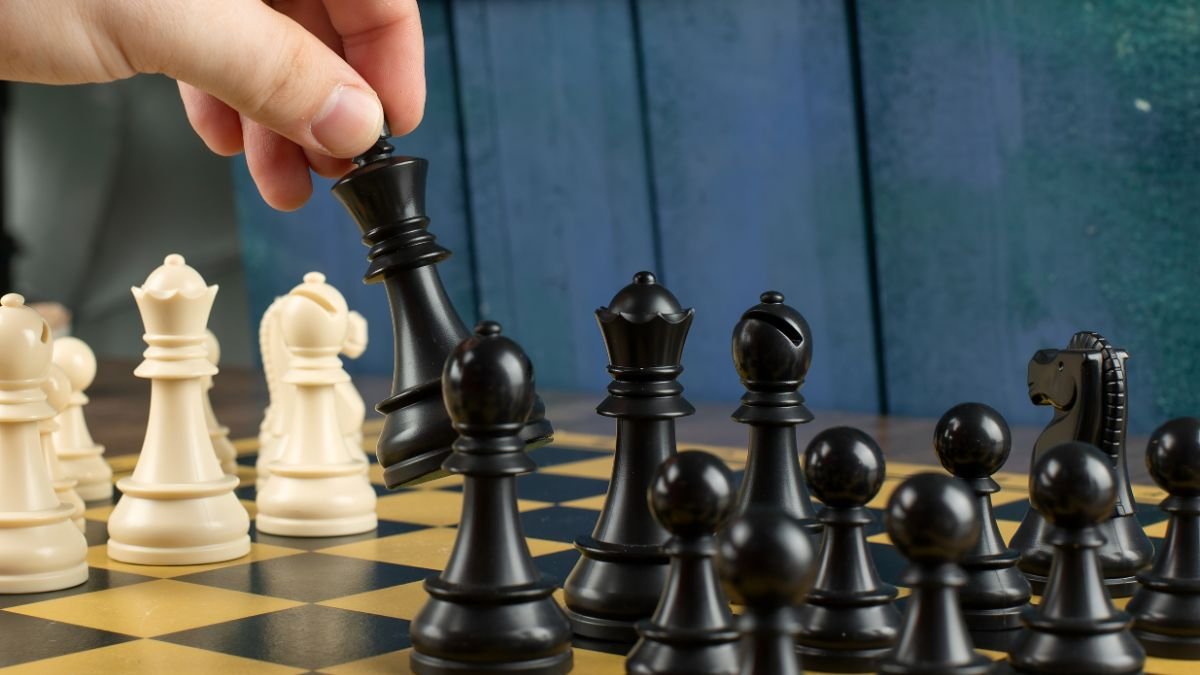
I have a friend named Sarah. She once told me that she spent her entire thirties feeling as though life was happening to her, rather than her actually living it. She changed jobs, broke off an engagement, and—on a whim—moved across the country, simply because she’d had an argument with her mother. She would recount these events as if they had simply “befallen” her—much the way the weather changes: suddenly and without anyone’s volition. When I asked her what she had chosen during those years, she remained silent for a long time. Then, softly, she replied, “I chose not to choose. I think that was the problem.”
This isn’t just Sarah’s story. Most of us view our lives through this very lens—as a long procession of events, some good and some bad, all simply drifting along in the current of time. We either get the job, or we don’t. The relationship either works out, or it falls apart. We keep telling ourselves that we are simply doing our best and that everything else lies in the hands of fate. But this mindset is a massive—and dangerous—delusion. The reality is that every moment in which you took no action was, in itself, a decision. Every conversation you avoided, every choice you deferred until tomorrow, every time you said “okay” when absolutely nothing was okay—these were all moves you made. The only difference was that you failed to recognize, in the moment, that you were making a move at all.
The Board Was Always There
My childhood home was filled with a peculiar kind of turbulence. My mother’s temperament was utterly unpredictable; her moods dictated the atmosphere of every evening. In response, my father would cloak himself in a profound stillness—a silence that, for years, I mistook for absence. As a child—even before I had learned to read books—I had already learned to read the mood of a room. Every raised eyebrow, every shifting tone of voice—these were all fragments of information to me, which I would instantly decipher in an attempt to anticipate the next storm, so that I might avert it.
I didn’t realize it at the time, but I was already playing chess. My living room was my chessboard. My words and my silences were both my pieces. And my strategy, formed by the age of eight or nine, was entirely defensive: keep everyone calm, make myself small, and anticipate needs before they were even voiced. It worked, too. For a while, at least.
But a purely defensive strategy has one major flaw: you never move forward. You simply hold your ground. You survive. But you never head in the direction you truly desire, for when all your energy is consumed by averting disaster, even having a desire begins to feel like a burden. This feeling doesn’t let go, even as you grow older—until you finally realize that this strategy wasn’t one you devised yourself, but rather one that circumstances had imposed upon you.
Silence, too, is a move.
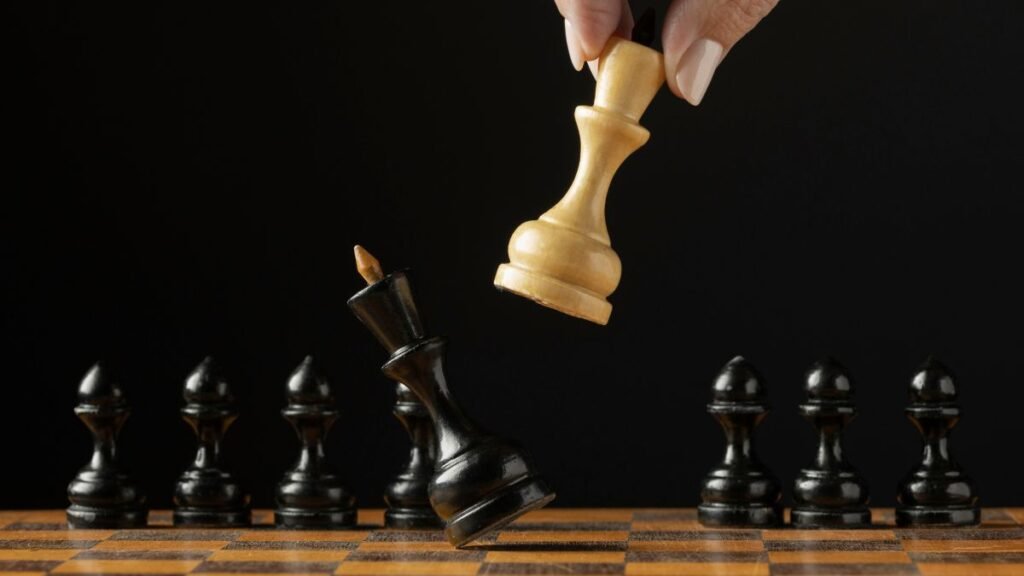
During my first marriage, I spent six years doing what I perceived as “taking no action.” When I was hurt, I remained silent. When I disliked certain plans, I agreed to them anyway. I continued to smile even through dinner parties where I felt utterly invisible. I told myself I was maintaining the peace—doing exactly what I had done in my childhood. But the truth was, I was wrong. In reality, I was making highly aggressive moves—moves toward isolation, toward invisibility—without ever realizing where I was headed. Every suppressed anger, every unspoken word—each was a step closer to a place from which the only escape was abandoning everything entirely.
In psychology, there is a crucial concept for this: the “Locus of Control.” It indicates whether you believe that the events of your life are shaped by your own decisions or by external forces. Those who believe in external control view themselves as passengers—going wherever life takes them. Conversely, those who believe in internal control understand that every move they make—whether deliberate or unintentional—shapes the outcomes. The research on this subject is striking: those who believe that their actions matter experience less anxiety, perform better in their careers, and find greater satisfaction in their relationships. And those who view life as random simply stop trying to play the game well. I spent the better part of my twenties in that second camp.
The opening moves determine everything.
In chess, the opening moves lay the foundation for everything. They determine which territory you will occupy, how much freedom your pieces will enjoy, and the overall character of the entire game. Great chess masters study opening moves with a passion bordering on obsession, for they know that ten careless opening moves can bring the entire game to the brink of defeat.
Childhood is precisely this opening game of our lives. And most of us never had the opportunity to choose our opening moves ourselves. Our parents played those moves on our behalf—or circumstances did—and we entered adulthood facing a board position that we did not create. This is true. It carries weight. Research into early-life adversity demonstrates that these opening moves continue to exert their influence for decades.
But here is the realization I came to: accepting a poor starting position and conceding defeat in the game are two entirely different things. You may begin from a constrained, defensive posture and still play a magnificent game. The only question is whether you recognize that you are, in fact, playing. I grasped this truth at the age of 29—during a meditation class I had joined in a state of utter helplessness amidst my first marriage. The teacher uttered something that completely transformed my perspective on my own life. He said, “Every moment of awareness is a moment of choice. You are never not choosing.” That sentence felt to me like a door swinging open.
In the middle game, most people walk in their sleep.
In chess, the middlegame is the longest and most intricate phase. The principles of the opening have run their course. The endgame lies so far ahead that it cannot yet be calculated. You find yourself in open terrain, making decisions based on pattern recognition, intuition, and whatever strategic understanding you have accumulated thus far. These are your thirties and forties. Perhaps your fifties, too. It is that phase of life where the script carried over from childhood ceases to work, yet you haven’t written a new one yet. Most people drift through this period in a state of somnambulism—repeating patterns learned in childhood and mistaking this repetition for choice.
I have witnessed this time and again in my coaching practice. People describe their lives as chaotic—as if this chaos were merely a seasonal storm that had descended upon them. Yet, as we slowly map out the decisions that led to their current circumstances, something shifts in their eyes. They begin to see the moves. They start to grasp the trajectory that began at age 25 with the sentiment, “I didn’t want to cause any trouble,” and culminated at age 40 with the realization, “I no longer recognize my own life.” There is nothing magical about this—it is simply the power of looking back. And it is through this very power that future moves can be improved.
Those who are constantly doing something—who cannot sit still for even a moment—are often, in reality, running away from silence. This, too, is a problem of the “mid-game.” They are constantly making moves—rapidly, frantically—yet none of these moves are strategic. Everything is reactive. Instead of viewing the chessboard as it truly is, they merely keep shuffling the pieces around.
Sacrifice Is Part of the Game
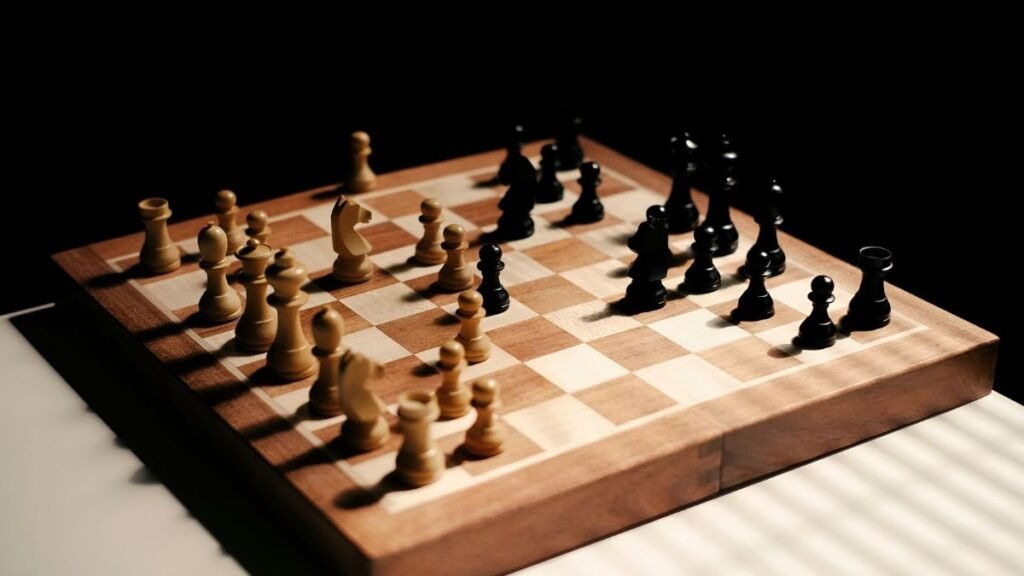
Sacrifice is essential for good chess. You give up a piece in order to secure a better position. You accept a small loss now to gain a long-term advantage. This runs completely counter to our survival instinct—which tells us to hold onto everything, lose nothing, and keep all options open.
When I quit my corporate marketing job at the age of 32, the people around me reacted as if I were throwing my queen into the fire. A steady paycheck, health insurance, a clear career path—why was I giving it all up? But I had finally begun to see that this place, which appeared “safe” on the surface, was actually a slow suffocation. I was dedicating the most productive hours of my day to work that aligned with none of my core values. And every year I remained there was a move that further narrowed my options.
In life, sacrifice looks something like this: leaving a marriage that appears fine from the outside; ending friendships where you were merely acting out a connection rather than experiencing a genuine one; and stepping away from the identity that others have constructed for you so that you can discover who you truly are. Doing all of this feels terrifying—and that is natural. It is always difficult to let go of the familiar, even when it is causing us harm. But a chess master knows that without sacrifice, there is no victory.
Start Recognizing Your Moves
So, the question now is: what do we do? The first step is simply to acknowledge that we are playing the game. It sounds simple, yet it is often the hardest part. For as long as we continue to view ourselves merely as passengers—drifting along in the current of life—we continue to evade responsibility. And while evading responsibility may feel comfortable, it ultimately keeps us stuck exactly where we are.
The second step is to examine your past moves—without self-recrimination. This inquiry is not meant to punish; it is meant to foster understanding. Where did you choose to remain silent? Where did you say “yes” when your heart wanted to say “no”? In which relationships, in which activities, and in which places did you gradually erase yourself? As you begin to seek answers to these questions, a map begins to emerge. And once you possess a map, changing your path becomes possible.
The third step is to begin making small, deliberate moves. No one needs to change everything all at once. Even in chess, one moves only one piece at a time. Have that conversation you have been avoiding. Make that decision you have been postponing for months. Identify that habit which distances you from your true self. Together, these small moves bring about significant change.
Not an End, but a New Beginning
What Sara said—”I chose not to choose”—was a deeply honest statement. And within that very honesty lay her strength. For the moment you recognize that your silence, too, was a move—that your inaction, too, was a decision—from that very moment, you can begin to play with conscious awareness.
The chessboard has always been there. The pieces have always been in motion. The only difference is that now, you are watching. And when you can see, you can choose. And when you can choose, life ceases to be something that “just happens”—you begin to truly live it.
This is chess. And you have always been a player.






Leave a Reply